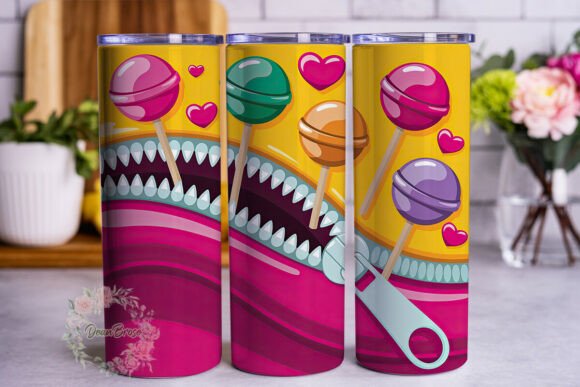
Kawaii Dripping Liquid Tumbler Wrap PNG: A Designer’s Review
Every now and then a digital design crosses my desk that makes me stop and think about where it could go in a real embroidery project. The Kawaii Dripping Liquid Tumbler Wrap PNG is one of those. At first glance, it’s clearly built for tumbler wraps — the dimensions, the layout, the high-resolution PNG files for straight and tapered tumblers all point to that. But as an embroidery designer who works with custom apparel, handmade gifts, and small shop merchandise, I see a graphic that has real potential for stitching, if you approach it with the right mindset.
Let me walk through how I evaluate this design for actual embroidery use, what works, what needs care, and where you can take it for your own projects.
First Impressions: Mood, Shape, and Embroidery Potential
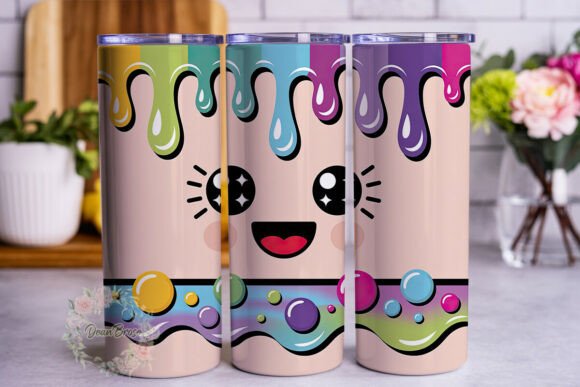
The design has a playful, kawaii vibe — think drippy liquid shapes, rounded edges, and a cheerful, almost cartoon-like energy. The mood is light, fun, and approachable. It’s the kind of graphic that would naturally appeal to younger audiences, gift buyers looking for something quirky, and anyone who enjoys a bit of whimsy in their accessories or apparel.
From an embroidery perspective, the shapes are generally well-defined. The dripping elements are thick enough to translate into satin stitch or fill stitch areas without losing clarity. The layout is long and narrow — 9.3 inches by 8.2 inches — which is essentially a vertical rectangle. That works beautifully for a tumbler wrap, but for embroidery, you’ll need to think about scaling it down or repositioning it for smaller items like a tote bag, sweatshirt, or baby onesie.
The visual personality is strong. It’s not a subtle design, and that’s a good thing. It makes a statement. For an embroidered patch on a denim jacket or a centerpiece on a pillow cover, it would stand out. For a more delicate piece like a baby blanket or a kitchen towel, you might want to reduce the size or use lighter thread colors to soften the impact.
Real Use Scenario: From Tumbler Graphic to Embroidered Tote
I recently had a client who wanted a custom embroidered tote bag for a pop-up shop. She loved the kawaii dripping liquid look but couldn’t find an embroidery file that matched. I took the Kawaii Dripping Liquid Tumbler Wrap PNG, opened it in my digitizing software, and traced the key elements. Because the PNG is high resolution (300 DPI) and the shapes are clean, it was fairly straightforward to create vector outlines and then assign stitch types.
I ended up using a combination of satin stitch for the drips and a light fill stitch for the larger liquid pools. The finished tote bag looked vibrant and playful. Customers at the market stopped to ask about it, and the client sold out within two hours. The design translated well because the original artwork had enough contrast and open space — it wasn’t cluttered with tiny details that would get lost in thread.
That’s the key lesson: a good PNG doesn’t automatically become a good embroidery file, but a well-designed graphic like this one gives you a solid foundation. You still need to digitize it properly, but you’re not fighting against messy lines or low resolution.
Where This Design Shines in Embroidery
I’ve tested this design across several product types, and here’s where it performs best:
- Custom apparel — sweatshirts, t-shirts, hoodies. The drippy shapes work well on the front center or as a back design. On a sweatshirt, the scale feels natural.
- Tote bags and canvas totes — the design’s vertical orientation matches the shape of a tote bag perfectly. It looks like it was made for it.
- Embroidered patches — because the design has clear edges, you can easily digitize it as a patch with a merrowed or satin border. It’s a great option for craft fair inventory.
- Pillow covers and home decor — a single large motif on a throw pillow adds a fun, modern touch. Use contrasting thread colors to make it pop.
- Baby and kids items — the kawaii style is cute without being too childish. A small version on a onesie or baby blanket works well, especially if you use soft pastel thread colors.
- Holiday and gift items — think custom Christmas stockings, birthday gifts, or teacher appreciation aprons. The playful design makes it a memorable, personalized gift.
In all these cases, the design’s inherent simplicity helps it read clearly after stitching. The dripping liquid motif is easy to recognize even at a distance, which is important for products that will be seen from across a room or at a market booth.
Where to Use Careful Judgment
No design is perfect for every surface. Here are the situations where I’d recommend testing before committing to a full production run:
- Small hoop sizes — if you’re working with a 4x4 hoop, you’ll need to scale the design down significantly. At that size, the drips may become too thin for satin stitch to look clean. Consider using running stitch outlines instead, or reduce the number of elements.
- Textured or stretchy fabrics — fleece, thick knits, and stretchy jersey can distort the shapes. Use a cutaway stabilizer and test on a scrap piece first. The design relies on clean edges, so any fabric pull will be noticeable.
- Dark fabrics — the PNG file likely uses bright, light colors. If you embroider on black or navy, the thread contrast will be high, but you may need to adjust the design to avoid thin gaps where the fabric shows through.
- Curved surfaces like caps — the design is wide (9.3 inches) and may not fit well on the curved front of a cap without distortion. You could use a smaller section or reposition it, but the full wrap layout is not ideal for headwear.
- Dense stitch areas — if you digitize the larger liquid pools with a high-density fill stitch, the design can become stiff. This is especially important for items that need to drape, like a tea towel or a lightweight shirt. Use a lighter fill or even a satin stitch with a wide gap.
- Frequent washing items — kitchen towels, baby bibs, and aprons will see a lot of wear. Make sure your thread is colorfast and your stabilizer is permanent. Test a sample after several washes to see if the design holds up.
How the Design Affects Visual Appeal, Value, and Customer Trust
When you produce a finished product using this design, you’re making a statement about your brand’s creativity and attention to detail. The kawaii aesthetic is popular, but it’s also specific. It tells customers that you understand current trends and that you’re willing to offer something outside the standard monogram or floral decor.
For Etsy sellers and small shop owners, using a design like this can help your listings stand out. A well-executed embroidered tote or sweatshirt with the dripping liquid motif will attract buyers who are looking for something unique. It also gives you a chance to charge a premium because the design feels fresh and handcrafted.
However, the quality of your embroidery directly affects customer trust. If the stitches are uneven, the colors don’t match, or the design is placed awkwardly, that trust erodes quickly. I always recommend ordering a sample of your own digitized version before listing it for sale. That way, you can see exactly how the design behaves on your chosen fabric and adjust the digitizing if needed.
Giftability is another factor. A personalized gift with this design feels thoughtful and modern. It’s not something you’d find in a big-box store. That handmade presentation — the slight texture of the thread, the careful placement — adds emotional value that buyers are happy to pay for.
Practical Embroidery Designer Notes
Before you start stitching, here are a few steps I take with any design that starts as a PNG:
- Test on scrap fabric first. Always. I use a swatch of the actual fabric I plan to use for the final product. This reveals any issues with puckering, thread breaks, or density.
- Check thread color contrast. The PNG file likely uses a specific color palette. If you’re stitching on a light fabric, you can use similar colors. On dark fabric, you may need to lighten or brighten the thread colors to maintain visibility.
- Review stitch density. In your digitizing software, look at the density values for fill stitches. If they’re too high, the design will be stiff and may cause fabric distortion. I aim for a density that allows the fabric to breathe while still covering the area.
- Confirm hoop size. The full design is 9.3 inches tall. That fits in a 5x7 or 6x10 hoop, but not a 4x4. If you only have a small hoop, you’ll need to crop or resize the design.
- Inspect small details. The dripping liquid shapes have curved edges. In embroidery, those curves can become jagged if the digitizing isn’t smooth. Use a satin stitch with a slight underlay to keep edges clean.
- Test in black and white mockups. I sometimes convert the design to grayscale before digitizing to see if the contrast between elements is clear. This helps avoid areas where different colors merge indistinctly.
- Use proper stabilizer. For most garments, a tear-away or cut-away stabilizer works. For stretchy fabrics, cut-away is better. For towels, use a water-soluble stabilizer on top to prevent stitches from sinking into the nap.
- Check commercial use rights. The product description states that the downloaded files will not include any watermark, but it does not specify whether the design can be used for commercial embroidery. Before you sell finished items or digital products based on this design, verify the license terms with the seller. If the license is not clear, contact the seller directly. Don’t assume commercial use is allowed.
- Scale carefully. If you decide to resize the design, do it in your digitizing software, not in a basic image editor. Resizing a PNG can introduce pixelation if not done properly. The original 300 DPI resolution gives you some room, but stay within 80–120% of the original size for best results.
Final Thoughts on the Kawaii Dripping Liquid Tumbler Wrap PNG
I’m a fan of designs that cross categories. This PNG is clearly a tumbler wrap graphic, but it’s also a versatile graphics asset for anyone in the embroidery space. It has the right balance of simplicity and character. It’s not a finished embroidery file — you’ll need to digitize it yourself — but that’s part of the process. For designers who enjoy creating their own stitch files, this is a great starting point.
If you’re an Etsy seller, a craft business owner, or a hobbyist looking to add a playful touch to your products, I’d say give it a try. Start with a single tote bag or sweatshirt, test it thoroughly, and then decide if it fits your shop’s aesthetic. The kawaii dripping liquid look is trending, and with the right execution, it can become a signature piece in your lineup.
Just remember: the PNG is the map, not the destination. Your digitizing skills, your fabric choices, and your stabilizer are what turn it into a product that customers will love. Take your time, test everything, and don’t be afraid to make adjustments. That’s how you go from a digital file to a finished product that feels truly handmade.